

Your Kids Need to Floss. How Parents Can Make This a Habit
Flossing for Kids: When to Start, How to Do It, and Tips for Parents
Getting a young child to brush their teeth can be challenging enough. Adding flossing to the bedtime routine may feel like one more task, particularly when your child is tired, restless, or eager to get back to playing.
However, flossing is an important part of protecting children's oral health, even before their permanent teeth arrive. Once neighboring teeth begin touching, a toothbrush cannot adequately clean the surfaces between them. Flossing helps remove plaque and food debris from these areas, reducing the risk of cavities and supporting healthy gums.
The good news is that flossing doesn't have to become a nightly struggle. Choosing age-appropriate tools, finding a comfortable position, and gradually involving your child can make the process easier for everyone.
At Issaqueena Pediatric Dentistry and Orthodontics, Dr. Horton and our team help families across Seneca, Clemson, and Piedmont establish healthy oral hygiene habits from an early age. Here's what parents should know about introducing flossing and helping children develop the skills to eventually manage it independently.
Quick Takeaways
- Start flossing when teeth touch. A toothbrush cannot adequately clean the surfaces between neighboring teeth.
- Choose age-appropriate tools. Floss picks may be easier for younger children, while older children may learn to use traditional string floss.
- Help young children floss. Most children need parental assistance until around ages 8–10, depending on their coordination and technique.
- Make flossing part of the daily routine. Consistency, gentle movements, and a calm approach can help children become more comfortable with the habit.
- Look for signs of gum irritation. Persistent bleeding, swelling, or discomfort should be discussed with your child's pediatric dentist.
- Ask for personalized guidance. Your child's dental team can demonstrate proper technique and recommend tools that fit their needs.
Why Do Baby Teeth Need Flossing?
Although baby teeth eventually fall out, they serve several important purposes throughout childhood. They help children chew, support speech development, and maintain space for the permanent teeth developing beneath them. Protecting these teeth involves more than brushing alone.
When two neighboring teeth touch, their contact creates an area that toothbrush bristles cannot adequately reach. Plaque can accumulate between these surfaces, increasing the risk of cavities.
This is particularly important because cavities between teeth may develop without obvious symptoms. Parents may not notice a problem until it becomes visible or is identified during a dental examination.
Untreated decay in primary teeth can lead to discomfort, infection, or premature tooth loss. Losing a baby tooth earlier than expected may also allow neighboring teeth to shift, potentially affecting the space available for its permanent replacement.
Children should begin flossing once two neighboring teeth touch. Before that point, brushing may be sufficient to clean teeth that have visible spaces between them.
Regular preventive appointments also give your child's pediatric dentist an opportunity to identify areas that need additional attention and provide personalized oral hygiene guidance.
Choosing the Right Flossing Tools for Your Child's Age
There isn't one flossing tool that works best for every child. Their age, coordination, tooth spacing, and comfort level can all influence which option is easiest to use.
The priority is choosing a method that effectively cleans between their teeth without making the experience unnecessarily difficult.
Toddlers and Preschoolers
For very young children, floss picks with short handles may be easier for parents to manage than traditional string floss.
Their design allows you to reach between small teeth while maintaining a comfortable grip. Children at this stage generally need a parent or caregiver to perform the flossing for them.
Introduce the process gradually, using gentle movements and simple explanations about what you're doing.
Early Elementary-Age Children
As children develop better coordination, they can begin participating in their flossing routine. You might let your child hold a floss pick and practice reaching their front teeth before helping them clean the remaining areas.
Parent supervision is still important. Children may be enthusiastic about doing things independently but lack the dexterity needed to clean every contact effectively, particularly around their back teeth.
Older Children and Tweens
Older children can gradually transition toward independent flossing as their fine motor skills improve. Traditional string floss may provide greater flexibility around individual teeth, although floss picks remain a practical option when used correctly.
For children with braces or other orthodontic appliances, floss threaders, orthodontic flossers, or interdental brushes may help clean around wires and brackets.
Water flossers can also be useful for certain children, particularly those with orthodontic appliances or difficulty using traditional floss. Your child's dental team can explain how to incorporate one into an effective cleaning routine. The best tool is one your child can use consistently and correctly.
How to Floss Your Child's Teeth
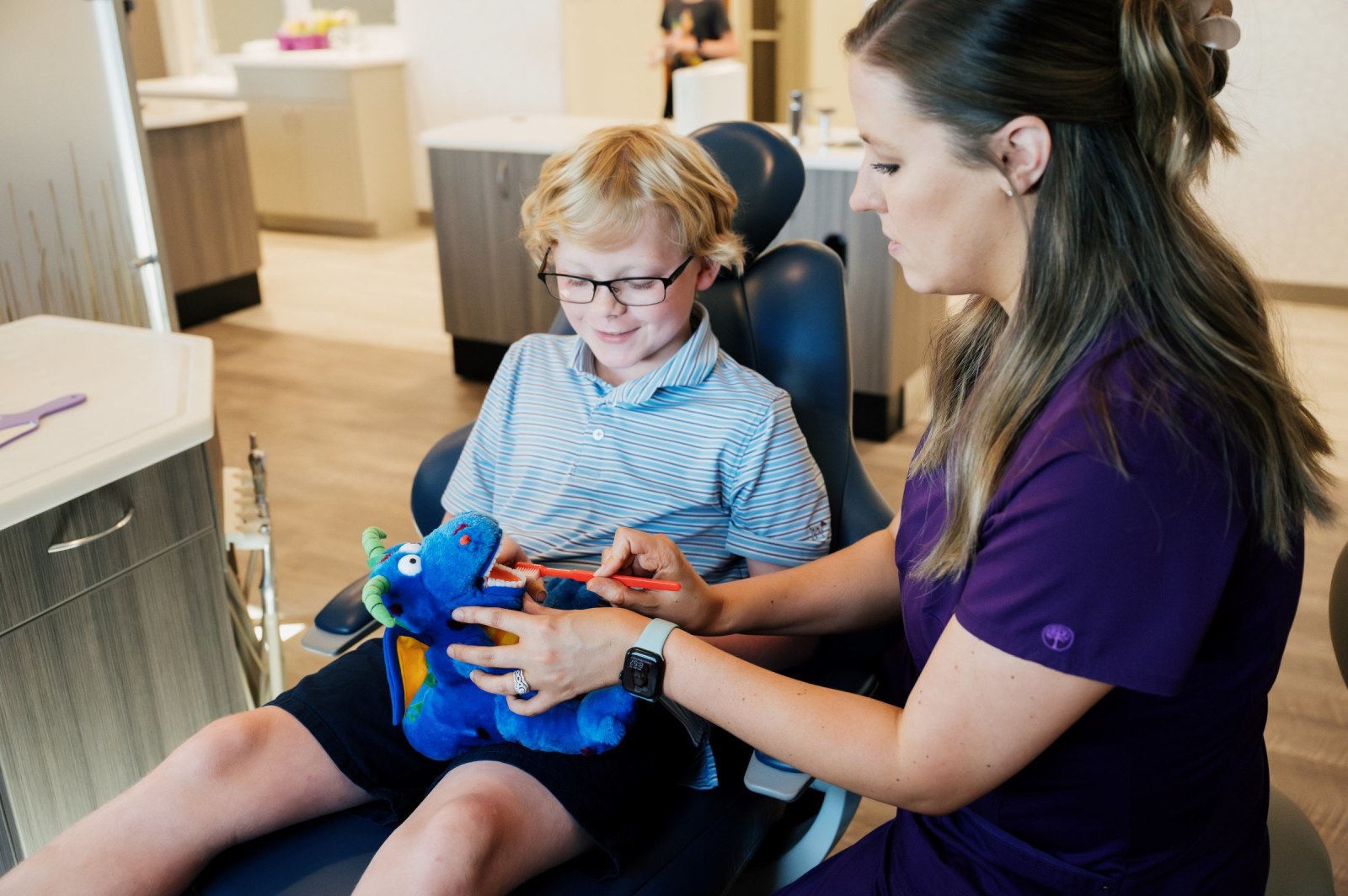
Flossing should be gentle and thorough. Forcing floss between teeth or snapping it against the gums can cause unnecessary discomfort.
Whether you're using traditional floss or a floss pick, the basic technique remains similar:
- Carefully guide the floss between two neighboring teeth using a gentle back-and-forth motion.
- Curve the floss against the side of one tooth, forming a C shape.
- Move it gently up and down along the tooth surface, including just beneath the gumline.
- Repeat against the neighboring tooth before moving to the next space.
- Continue until you've cleaned between all teeth that touch.
If you're using string floss, move to a clean section as you progress through your child's mouth.
Some initial gum bleeding may occur when flossing hasn't been part of the regular routine. However, persistent bleeding, swelling, or discomfort should be discussed with your child's dentist.
You don't need to rush through the process. A calm, consistent approach can help your child become more comfortable while ensuring their teeth are cleaned effectively.
Making Flossing Easier for Children Who Won't Sit Still
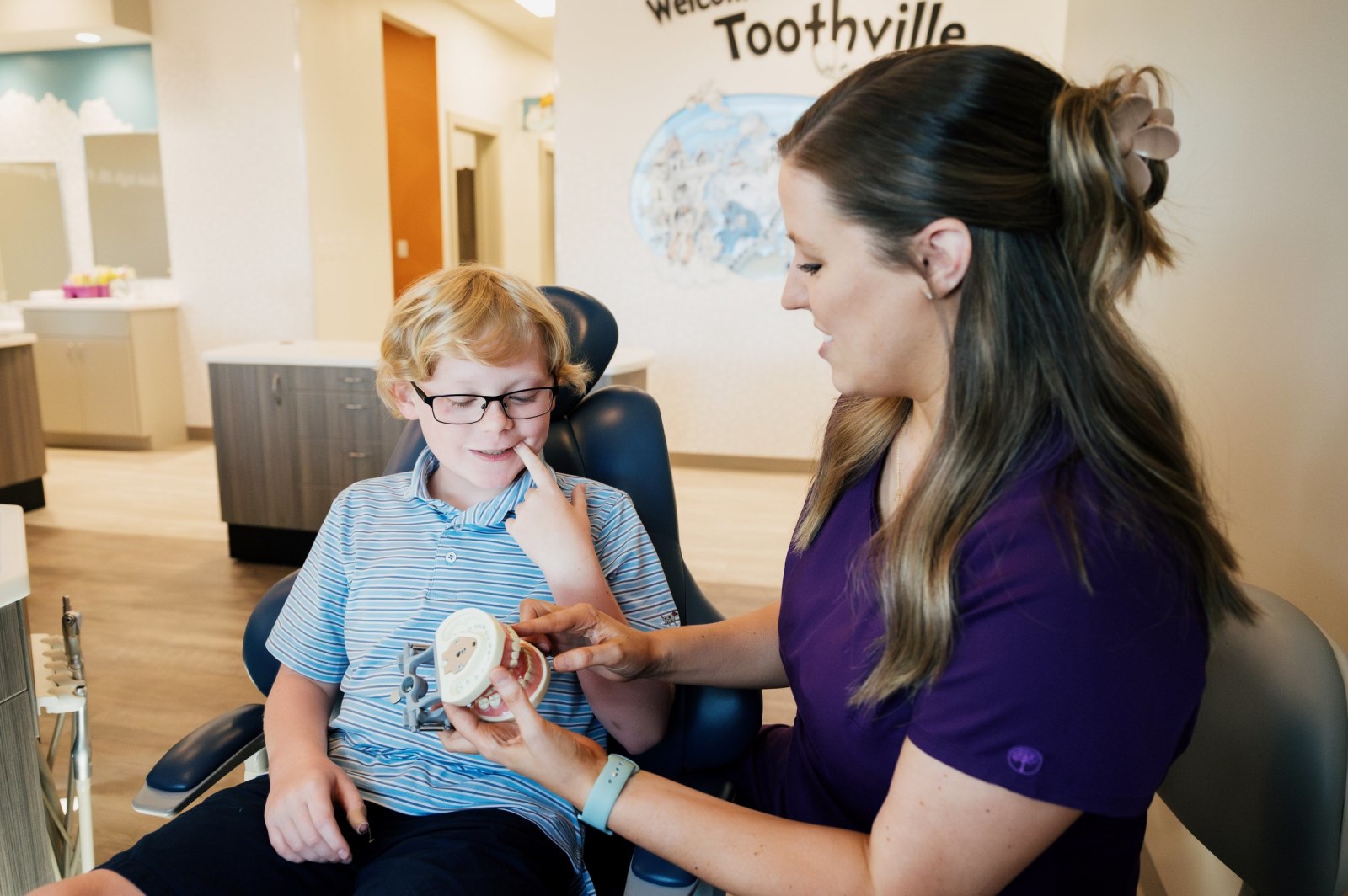
One of the biggest challenges parents face isn't understanding how to floss. It's finding a way to do it while their child is moving, turning their head, or becoming impatient.
Changing your child's position can make a meaningful difference.
Try a Lap Position
Instead of asking a young child to stand still in front of the bathroom mirror, consider having them lie back with their head resting comfortably in your lap.
This position can provide a clearer view of their teeth and allow you to use both hands more effectively. It is similar to the positioning sometimes used during early pediatric dental examinations.
For younger children, having another caregiver nearby to provide reassurance or distraction may also help.
Make Flossing Part of an Established Routine
Consistency helps children understand what to expect. Choose a regular time each day, such as during their evening oral hygiene routine, and keep the process calm and predictable. Flossing once daily is generally recommended.
You can also let your child choose between age-appropriate flossing tools or participate by holding their own floss pick while you assist.
Small opportunities for involvement can help children develop confidence without placing responsibility for effective cleaning on them too early.
Consider Sensory Sensitivities
Some children find the feeling of floss against their teeth or gums particularly uncomfortable.
If your child consistently becomes distressed, avoid forcing the process. Speak with their pediatric dentist about alternative tools, positioning techniques, or a gradual approach to introducing flossing.
The goal is to establish effective oral hygiene while supporting a positive relationship with dental care.
When Can Children Start Flossing Independently?
Most children need assistance with flossing until they develop sufficient fine motor coordination, often around ages 8 to 10. However, readiness varies, and some children need parental help for longer. Rather than transferring responsibility all at once, introduce independence gradually.
Younger children can begin by holding a floss pick and practicing on easily accessible teeth. As their coordination improves, encourage them to clean additional areas while you supervise. Eventually, you may only need to check their technique and remind them to complete their routine.
A child who can floss independently should be able to reach their back teeth, clean both sides of each contact, and use gentle movements without injuring their gums.
If you're unsure whether your child is ready, ask their pediatric dentist or hygienist to demonstrate proper technique during their next appointment.
What Happens If Your Child Regularly Skips Flossing?
Missing an occasional night of flossing doesn't mean your child will automatically develop a cavity. However, consistently leaving the spaces between touching teeth uncleaned allows plaque to accumulate in areas brushing cannot adequately reach.
Over time, this may contribute to:
- Cavities between teeth: Plaque bacteria produce acids that can gradually weaken tooth enamel.
- Gum inflammation: Plaque accumulation near the gumline may cause redness, swelling, or bleeding.
- More extensive dental treatment: Cavities that go undetected may progress and eventually require restorative care.
Cavities between teeth are not always visible during a routine look inside your child's mouth. Your pediatric dentist may recommend dental X-rays when appropriate to evaluate areas that cannot be examined directly.
Establishing a consistent flossing routine also helps children develop oral hygiene habits they can carry into adolescence and adulthood.
The emphasis should be on steady progress rather than perfection. If your family has struggled to maintain the routine, your child's next preventive appointment is an opportunity to discuss what might make it easier.
Let Us Help Your Child Develop Healthy Flossing Habits

Flossing is an important skill, but parents aren't expected to figure out every aspect of their child's oral hygiene routine on their own.
At Issaqueena Pediatric Dentistry and Orthodontics, we're happy to demonstrate age-appropriate flossing techniques, recommend suitable tools, and help you determine when your child is ready to take on more responsibility.
During your child's preventive appointment, we can also identify areas where plaque tends to accumulate and discuss ways to make brushing and flossing more effective at home.
To schedule a visit, contact the location most convenient for your family:
- Seneca: (864) 482-7900
- Clemson: (864) 722-9013
- Piedmont: (864) 625-1283
We look forward to helping your child build healthy habits that support their smile as they grow.
We can’t wait to meet you
Call or request an appointment online to set up your first visit. We’ll be in touch soon.
